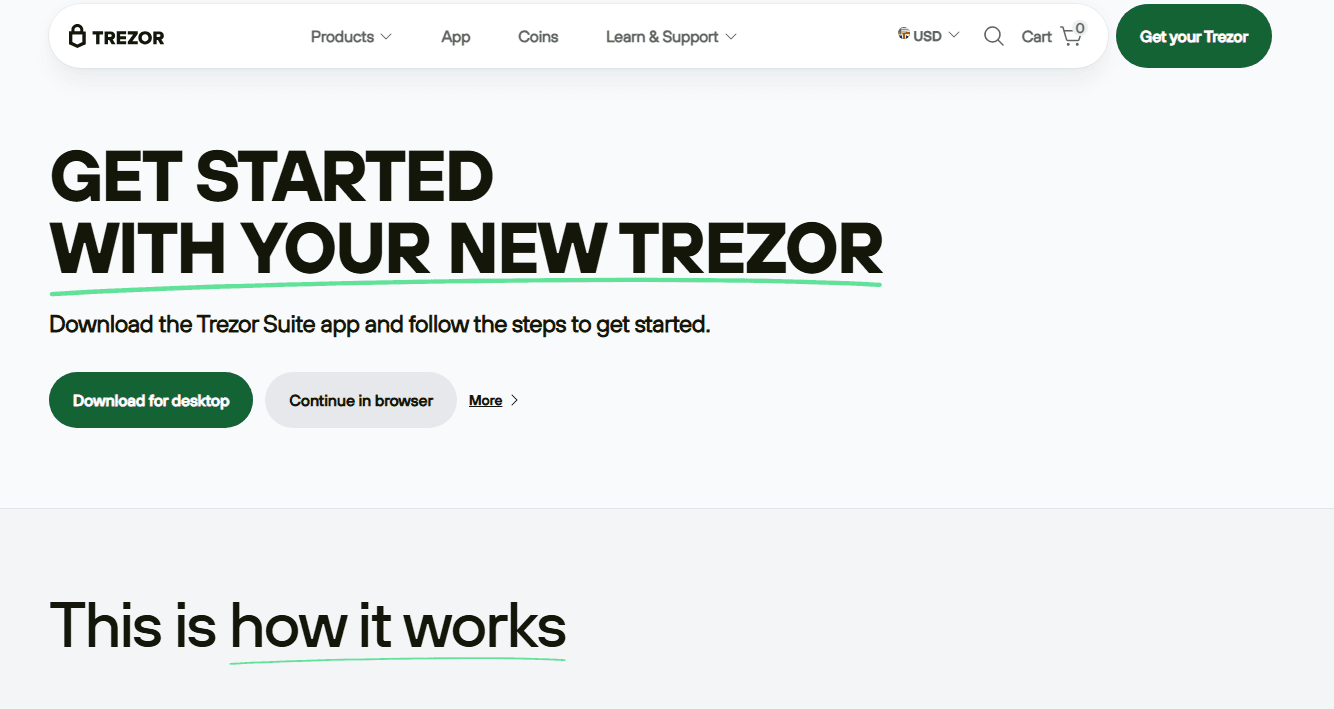
Trezor Login: A Comprehensive 1200-Word Guide to Secure Wallet Access
Accessing a Trezor wallet is a unique experience compared to traditional online accounts. Unlike web-based platforms that rely on usernames, emails, and passwords, Trezor ensures security by combining hardware-level authentication with user-controlled PINs and passphrases. Logging in to a Trezor wallet involves interacting directly with the device and using Trezor Suite, the companion software, without exposing private keys to the internet.
This guide walks you through the login process, security mechanisms, and best practices to ensure your crypto remains safe. It’s designed for beginners and advanced users who want a full understanding of how Trezor protects digital assets during login and daily use.
1. Understanding Trezor Login Fundamentals
The concept of logging in with a Trezor device differs fundamentally from traditional login systems. Trezor is built on self-custody, meaning that all private keys remain on the device and are never transmitted or stored online. The login process is designed to:
Authenticate ownership of the device
Ensure no unauthorized access
Protect keys from malware or hackers
Require physical confirmation for sensitive actions
This approach allows users to access and manage cryptocurrency safely without exposing private keys to computers, networks, or cloud servers.
2. Requirements for Accessing Your Wallet
Before attempting to log in to your Trezor wallet, you need:
A Trezor hardware wallet (Model One or Model T)
Trezor Suite installed on your computer or mobile device
Your personal PIN
An optional passphrase if you enabled this extra security layer
No email address or online account credentials are necessary. Access is controlled entirely through the physical hardware device and your chosen authentication methods.
3. Connecting the Device
The first step in logging in is physically connecting your Trezor device to your computer or mobile device. Once connected:
Trezor Suite detects the device
It displays the firmware status and security warnings
You are prompted to begin the authentication process
The device must be physically present, which ensures that even if a computer is compromised, unauthorized users cannot access the wallet.
4. Entering Your PIN Code
The PIN code is the first layer of security when logging in. Trezor uses a scrambled PIN entry system, which prevents keyloggers or malware from discovering your PIN.
Here’s how it works:
Trezor Suite displays a blank grid
The Trezor device screen shows the numbers in random order
You enter the corresponding positions on the Suite, not the actual digits
This method ensures that the PIN itself is never transmitted to the computer, and it changes with every login attempt, making it almost impossible for attackers to intercept.
5. The Purpose of the Scrambled PIN System
Most devices require direct PIN entry, which can be observed or recorded by malicious software. Trezor’s approach prevents:
Screen logging attacks
Keystroke tracking
Brute-force guessing from compromised computers
Even if someone monitors your computer, the PIN remains secure because only the correct positions on your device will unlock it.
6. Passphrase: Adding a Hidden Layer of Security
For advanced users, Trezor offers a passphrase feature that adds another layer to your login process. The passphrase:
Generates a completely new wallet derived from your recovery seed
Can be alphanumeric and customized for complexity
Hides the wallet entirely if lost or stolen
You can enter a passphrase either on the Trezor device or through the Suite. Entering it on the device ensures it is not exposed to your computer or any potential malware. Each passphrase results in a unique wallet that cannot be accessed without the exact phrase.
7. Recovery Seed and Wallet Restoration
While the recovery seed is not required for daily login, it is crucial for restoring access if your device is lost or reset. The recovery seed:
Recreates all accounts and private keys
Must be stored offline and securely
Should never be entered into a computer or shared digitally
If the recovery seed is lost and the device is inaccessible, the wallet cannot be recovered. This emphasizes the importance of careful storage.
8. Accessing the Wallet Dashboard
After successfully entering your PIN (and passphrase if used), the Trezor Suite opens your wallet dashboard. Here, you can:
View account balances across cryptocurrencies
Add or manage accounts
Send and receive transactions
Monitor portfolio performance
Access device management and security settings
The Suite provides a user-friendly interface, while private keys remain safely stored in the Trezor device.
9. Confirming Transactions and Actions
Even after login, Trezor requires all sensitive actions to be confirmed on the device. These include:
Sending cryptocurrency
Viewing certain security details
Exporting public keys
Changing device settings
The on-device confirmation prevents malware or remote attackers from executing unauthorized transactions, as they cannot bypass physical approval.
10. Using Trezor on Multiple Devices
Trezor allows you to log in from multiple computers while keeping your keys secure. The login process is identical across devices, but safety practices remain essential:
Avoid using public computers
Verify the device screen for every action
Update firmware only from trusted environments
Even if a connected device is compromised, your private keys remain offline and protected.
11. Logging Out and Disconnecting
Logging out is simple: disconnect the Trezor device from the computer. Once disconnected:
Wallet access ends immediately
No session remains active
Private keys stay offline
This method ensures there is no persistent login or vulnerability on the host device.
12. Forgotten PIN Recovery
If you forget your PIN, the device must be reset, which wipes all stored data. To regain access:
Reset the Trezor hardware
Restore the wallet using the recovery seed
The recovery seed is the only method to regain access after a reset, making it crucial to store securely. Without it, access to the wallet is permanently lost.
13. Best Practices for Trezor Login Security
To maintain strong security, follow these guidelines:
Memorize your PIN and do not store it near your device
Use a passphrase for added protection
Keep your recovery seed offline and secure
Verify the device screen for all transactions
Avoid entering sensitive data on untrusted computers
Keep Trezor firmware and Suite software up to date
These habits ensure your crypto remains safe even in risky digital environments.
14. Advantages of Trezor Login
Trezor login provides unique benefits over conventional online wallets:
Hardware-based security: Keys never leave the device
Physical confirmation: Every action requires your approval
Offline protection: Resistant to malware and remote attacks
Customizable security: Passphrase and PIN options enhance privacy
The combination of these features gives users confidence that their crypto is well-protected, even if connected devices are compromised.
Conclusion
Trezor login is more than a simple access step—it is a security system that combines hardware, cryptography, and user interaction. By using a PIN, optional passphrase, and physical confirmation, Trezor ensures that only you can access and manage your cryptocurrency.
Unlike traditional online logins, Trezor protects private keys by keeping them offline at all times, making it a safe and reliable solution for self-custody. Understanding the login process, from connecting the device to confirming transactions, empowers you to manage your assets confidently and securely.
With careful use of PINs, passphrases, and recovery seeds, Trezor login provides a robust foundation for long-term crypto safety.